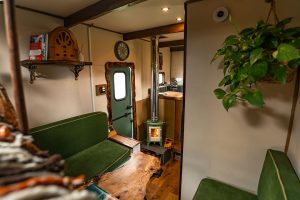
Tiny Wood Stove is a family-owned business based in Hayden, Idaho. The company was founded in 2012 by an RVer named Nick, who was searching for a safe and effective heating solution for his own Airstream.
What Nick found was concerning. Many small wood stove manufacturers were selling the stoves without providing the proper parts and expertise required for a safe installation. He learned that some were suggesting the use of pellet stove pipe. When this material is exposed to the higher temperatures of traditional wood-burning stoves, the pipe can emit highly toxic fumes.
Nick was motivated by this safety hazard. He decided to start manufacturing proper, smaller-diameter wood stove pipe. This led him to design and produce the flagship Dwarf line of wood stoves.
Today, Tiny Wood Stove caters to those living in small spaces and off-grid enthusiasts. Tiny Wood Stove not only offers their expanded line of stoves but also has products like the Throne composting toilets—a welcome alternative to dealing with dreaded black tanks.
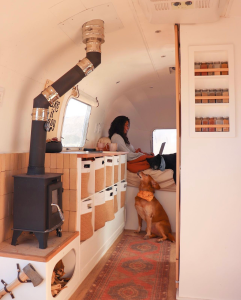
To get the facts on essential safety and precautions for indoor use wood stoves in tiny areas, I spoke with Cody from Tiny Wood Stove. I was aware that sheet metal can be used on the wall as a heat shield. However, I wasn’t sure how a tiny stove would affect spacing for property safety measures. His in-depth response was incredibly helpful for the finished product.
“The safety clearances to combustibles are the most essential factor for any wood stove installation. For our Dwarf Stoves, the standard clearances are:
Back of the stove and single-wall pipe: 18 inches
Sides of the stove: 16 inches
Top of the stove to the ceiling: 36 inches
Double-wall insulated stovepipe: 2 inches
For anyone familiar with small spaces, those can feel like large numbers; however, this informative article describes exactly how you can use heat shields to reduce them significantly.”
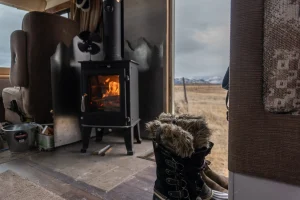
Installation might seem daunting, but Tiny Wood Stove makes it easy. In fact, most of their customers successfully DIY their stove installation, much like many of our own skirting customers. The company specifically designs the Dwarf stoves to be DIY-friendly, with care for safety and ease of process.
Tiny Wood Stove customers receive an abundance of support resources, including:
The Tiny Wood Stove YouTube channel (featuring installation guides)
The comprehensive Dwarf stove manual
An informative website resource library
They also offer invaluable personal assistance via phone or email. Their support team has personal, firsthand experience, as they all live in small spaces with Dwarf Stoves they’ve installed themselves. So if you have questions regarding flue pipe, air inlet, or other specific concerns, the team at Tiny Wood Stove is a quick call away.
And for those who don’t feel comfortable with the DIY approach, the stoves can be easily installed by most professional contractors using simple tools and adhering to the clearance requirements in the manual.
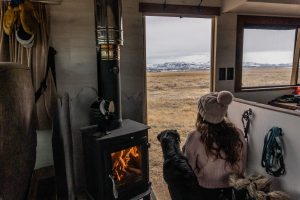
Just like with RV skirting and life in general, costs vary. The size of the Dwarf stove that best meets your space’s heating needs—which Cody notes is based on the overall volume (sq ft x height for interior cubit footage) of your RV or tiny home and the temperature rise required—will be the biggest factor.
Cody shared this valuable insight on pricing: “Our stoves range from $725 to $1,195, and typically, the installation parts tend to run around the same cost as the stove.”
To budget effectively, you should generally plan for the total expense (stove plus required installation components) to be roughly double the stove’s base price.
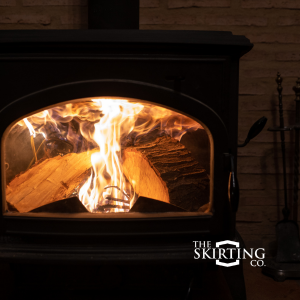
Having owned wood stoves in our “sticks and bricks” homes—including a wood cookstove I adored—our biggest deciding factor was always the size of the firebox and the door opening. A larger box meant less cutting and longer burn times without constant refilling.
When I asked Cody about the maximum wood size for the Dwarf stoves, I was a bit surprised by his insightful response:
“The amount and length of wood that fits depends entirely on the size stove that best meets your heating needs. Our stoves can fit wood lengths ranging from 6 to 12 inches. While a larger firebox does allow for a longer burn time, it’s important to keep in mind that you shouldn’t choose a stove based on its burn time. A longer burn is great, but it’s useless if it keeps your living space at 90∘F all night.”
Cody’s advice? “We prefer to use the smallest stove that can adequately heat your space, allowing you to enjoy hot, clean fires throughout the year.”
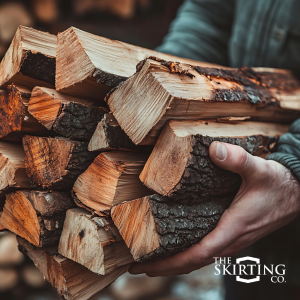
By definition, seasoned firewood is wood that has been air-dried to a moisture content of 20% or less. Personally, we’ve always preferred hardwood, cut and split for two years, as this method ensures the most efficient, clean burn with less wood and minimal smoke.
However, our move from the Midwest to the “land of conifers” meant that hardwood is practically non-existent. Due to these common circumstances for many RVers and Tiny Home owners, I asked Cody what types of wood he recommends for the Dwarf stoves.
With relief, I learned that while dry, seasoned hardwood remains the best option, the next best choice is whatever is abundant and local to your area. For the cleanest fire, Cody strongly recommends that all firewood have a moisture content of 15% or less.
For overnight burns, he suggests using a compressed log for cold nights. Due to its high heat content and dense, compressed nature, it provides a reliable, slow burn for extended heat.
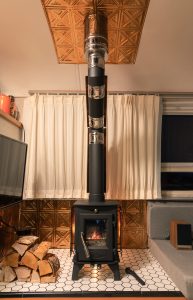
While there are a few alternative heat sources available for smaller living environments, I was consistently drawn to Tiny Wood Stove and their Dwarf products during my research. The difference lies entirely in the team: this small group of tiny-living folks have real-life experience with the products they make and sell. They are truly talking the talk and walking the walk.
This commitment to their customers’ well-being is summed up perfectly by Cody:
“We’re not here to sell you a product. We’re here to make sure you’re warm and cozy in your RV this winter. In most cases, this is with one of our stoves; however, there are situations where a smaller or larger stove offered by a competitor might better suit your needs.”
This commitment to recommending the right stove, even if it’s a competitor’s, underscores the integrity that sets Tiny Wood Stove apart.